
Category: Private Sector

  • Ethiopia’s Bishoftu Airport and the Future of African Aviation

    Ethiopia’s Bishoftu Airport and the Future of African Aviation

    An airport is often a country’s first and last impression. When Ethiopia unveiled the design for its long-anticipated Bishoftu International Airport on Saturday 10 January 2026, the impression was that Bishoftu will be unapologetically African and unmistakably world-class. The most ambitious aviation infrastructure project in Africa will one day stand alongside some of the world’s best airports, such as Changi and Hamad.

    The new $12.5bn airport is located 45 kilometres south of the capital, Addis Ababa, and will be linked by high-speed railway and motorway. Designed by the renowned London-based architects, Zaha Hadid, Bishoftu will initially serve 60m passengers when it opens in 2030. The capacity will increase to up to 110m passengers when the project is complete – four times the capacity of the current Bole International Airport.

    Bishoftu International Airport. Photo courtesy of Ethiopian Airlines promo video

    The new airport will feature an environmentally-efficient terminal, four long runways, parking for 270 planes and, integrated cargo and logistics facilities designed to support Ethiopia’s vision as Africa’s leading aviation hub. Beyond aesthetics, the design sends a clear message: Ethiopia is planning not just for today’s traffic, but for decades of growth in passengers, cargo, and regional connectivity.

    How the success of Ethiopian Airline built the foundation for Bishoftu

    The Bishoftu project must be understood in the context of Ethiopia’s unique aviation success story. Ethiopian Airlines (ET) has quietly become one of the most profitable and operationally sophisticated carriers in the Global South, building a pan-African and intercontinental network that rivals far wealthier peers.

    The airline posted revenues of $7.6bn in 2024/25 and had nearly 20m passengers. Addis Ababa has evolved into a true transit hub linking Africa to Europe, the Middle East, Asia, and the Americas. Yet success has created its own constraint. Bole is operating well beyond its intended capacity, limiting growth just as demand accelerates.

    Ethiopian Airlines. Editorial credit: Shutterstock

    Bishoftu is therefore not a vanity project—it is a capacity release valve. The airport is designed to accommodate wide-body aircraft, large-scale cargo operations, and future aviation technologies. Crucially, its location outside central Addis Ababa allows for expansion that is simply no longer possible at Bole, while also enabling the development of an aerotropolis linking aviation, logistics, light manufacturing, and services.

    Bishoftu must become a destination, not just a gateway

    The world’s best airports no longer feel like transit spaces. They feel like places you don’t mind being stuck in. Changi turned this into an art form with gardens, culture, retail, and wellness. Hamad followed with museum-grade art, luxury lounges, and hospitality-level service.

    Changi Airport in Singapore. Photo credit: Shutterstock

    An estimated 80% of Ethiopian Airlines passengers transit through Bole. Until recently, there was one Cloud Nine lounge for premium clients, which was always full. The airport suffers from inadequate seating and limited options for dining and shopping. It is loud and often chaotic. Guests in the airside hotel are not spared from the constant loudspeaker announcements, which start early in the morning.The environment in the VIP terminal is tranquil and relaxing – precisely what the rest of the airport should be like.

    Bishoftu has the opportunity to shake up the game in Africa where OR Tambo, Jomo Kenyatta and others have fallen short. In addition to the new lounges that were featured in the promo video, the airport authorities should aspire to lure shops that are not on the African continent like Chanel or Bottega Veneta, M&M and Hello Kitty. Children and families are currently not well-catered for at Bole, which only adds to the stress of travelling.

    Bishoftu will be a semi-open space with natural ventilation. Photo credit: Ethiopian Airlines promo video

    Lastly, authorities should ensure that Bishoftu caters to both passengers and locals. Changi has extensive dining and shopping landside, and is a popular weekend destination. Whilst the economics may not warrant a similar set up in Ethiopia, at the minimum viewing galleries and affordable eating places should be on offer to cater for locals, who want to and deserve to be part of experience.

    Financing the Airport: Scale, Structure, and Credibility

    The most consequential question surrounding Bishoftu is not design but the financing. Ethiopia’s challenge is to fund this ambition while preserving macroeconomic stability and avoiding excessive sovereign strain.

    Early signals suggest a blended financing model. This is likely to combine sovereign support, export credit agencies, development finance institutions, and carefully structured commercial debt. Given Ethiopian Airlines’ strong balance sheet and track record, the airline itself will play a central anchoring role—either through direct investment, long-term lease commitments, or guarantees that improve bankability. The airline has publicly committed to covering 30% of the total cost and has already allocated over $600m. The African Development Bank (AfDB) will fund $500m and has committed to source an additional $8.7bn.

    There is also scope for private capital participation, particularly in non-core assets such as cargo terminals, maintenance facilities, retail concessions, fuel farms, and airport cities. Global airport operators and infrastructure funds increasingly seek exposure to high-growth emerging markets, and Ethiopia—unlike many peers—offers a rare combination of traffic growth, operational competence, and a credible national carrier. The airline has seen interest from the Middle East, Europe, China and the US.

    That said, financing will hinge on governance and risk allocation. Investors will scrutinise currency risk, tariff frameworks, repatriation of earnings, and the legal structure governing the airport authority. Transparent concession models, predictable regulation, and ring-fenced revenue streams will be essential to crowd in long-term capital at sustainable pricing.

    Financing: What Comparable Airports Tell Us

    Ethiopia is not entering uncharted territory; several recent airport developments offer useful comparables for how Bishoftu could realistically be financed.

    Istanbul Airport (IST) provides one of the most relevant benchmarks. With an eventual cost exceeding $12bn, the airport was developed under a build–operate–transfer concession, financed largely through syndicated bank loans backed by future airport revenues rather than direct sovereign funding. Turkish Airlines played a key role. The Turkish state de-risked the project through traffic guarantees and regulatory clarity, allowing private capital to fund scale. While Ethiopia’s market structure differs, the lesson is clear: credibility, long-term concessions, and predictable cash flows matter more than GDP size.

    In the Gulf, the $35bn Al Maktoum International Airport (DWC) illustrates a different model. Financing has relied heavily on sovereign and quasi-sovereign balance sheets, supported by Dubai’s investment-grade credit and integrated aviation strategy. Airports, airlines, logistics zones, and real estate are treated as one ecosystem. Bishoftu is unlikely to replicate this approach fully, but Ethiopia can borrow the principle of anchoring airport financing to a national champion—Ethiopian Airlines—whose operational strength materially improves bankability.

    Beijing’s Daxing Airport. Photo credit: Shutterstock

    China’s $18bn Beijing Daxing International Airport (PKX) demonstrates the role of state-led financing at scale. Funded through a mix of central government support, policy bank lending, and municipal investment vehicles, Daxing prioritised speed and capacity over financial returns in the early years. Ethiopia does not have China’s fiscal depth, but development finance institutions and export credit agencies could play a similar catalytic role, particularly for runways, air traffic systems, and energy infrastructure.

    Closer to home, Africa’s experience is more mixed. Nairobi’s Jomo Kenyatta International Airport (NBO) expansions have relied primarily on sovereign borrowing and bilateral financing, often constrained by fiscal pressures and procurement delays. The contrast with Ethiopia is instructive: airline performance and execution capacity matter. Ethiopian Airlines’ track record gives Bishoftu a stronger foundation than most African peers have enjoyed.

    Finally, Ethiopia’s own Bole International Airport (ADD) expansion provides an internal precedent. Past upgrades were financed through a combination of airline cash flows, long-term loans, and government support—delivered incrementally rather than as a single mega-project. Bishoftu is likely to follow a similar phased approach, allowing capacity to scale while revenues ramp up.

    What This Means for Bishoftu

    Taken together, these comparables suggest Bishoftu will not—and should not—be financed as a purely sovereign project. A more credible structure is a blended model: sovereign support for core infrastructure, long-term debt backed by airport and airline revenues, and selective private participation in cargo, retail, maintenance, and airport-city assets. The objective is not financial engineering for its own sake, but risk alignment—matching long-dated infrastructure assets with patient capital.

    If Ethiopia gets this balance right, Bishoftu could become a rare example of an African mega-infrastructure project that is both ambitious and bankable—financed not on optimism, but on proven traffic, institutional capability, and execution discipline.

    Why Bishoftu Matters Beyond Ethiopia

    Bishoftu is not just an Ethiopian project—it is a continental one. Africa remains under-served by long-haul air connectivity, and too many passengers still transit through non-African hubs to travel within the continent. A scaled, efficient Bishoftu International Airport strengthens Addis Ababa’s position as a neutral, pan-African gateway, supporting intra-African trade, tourism, and business mobility in line with the African Continental Free Trade Area (AfCFTA) ambitions.

    The airport also reinforces Ethiopia’s broader industrial strategy. Air cargo is increasingly critical for high-value exports such as horticulture, pharmaceuticals, electronics, and time-sensitive manufacturing inputs. Bishoftu’s cargo-centric design positions Ethiopia to move up global value chains, not merely ship bulk commodities.

    A Test of Execution

    Ultimately, Bishoftu will be judged not by its renderings but by execution. Delivering a project of this scale on time and within budget—while maintaining airline operations at Bole—will test institutional coordination, project management capacity, and political discipline. Yet Ethiopia has form. Few African countries have executed complex aviation strategies as consistently over the past two decades.
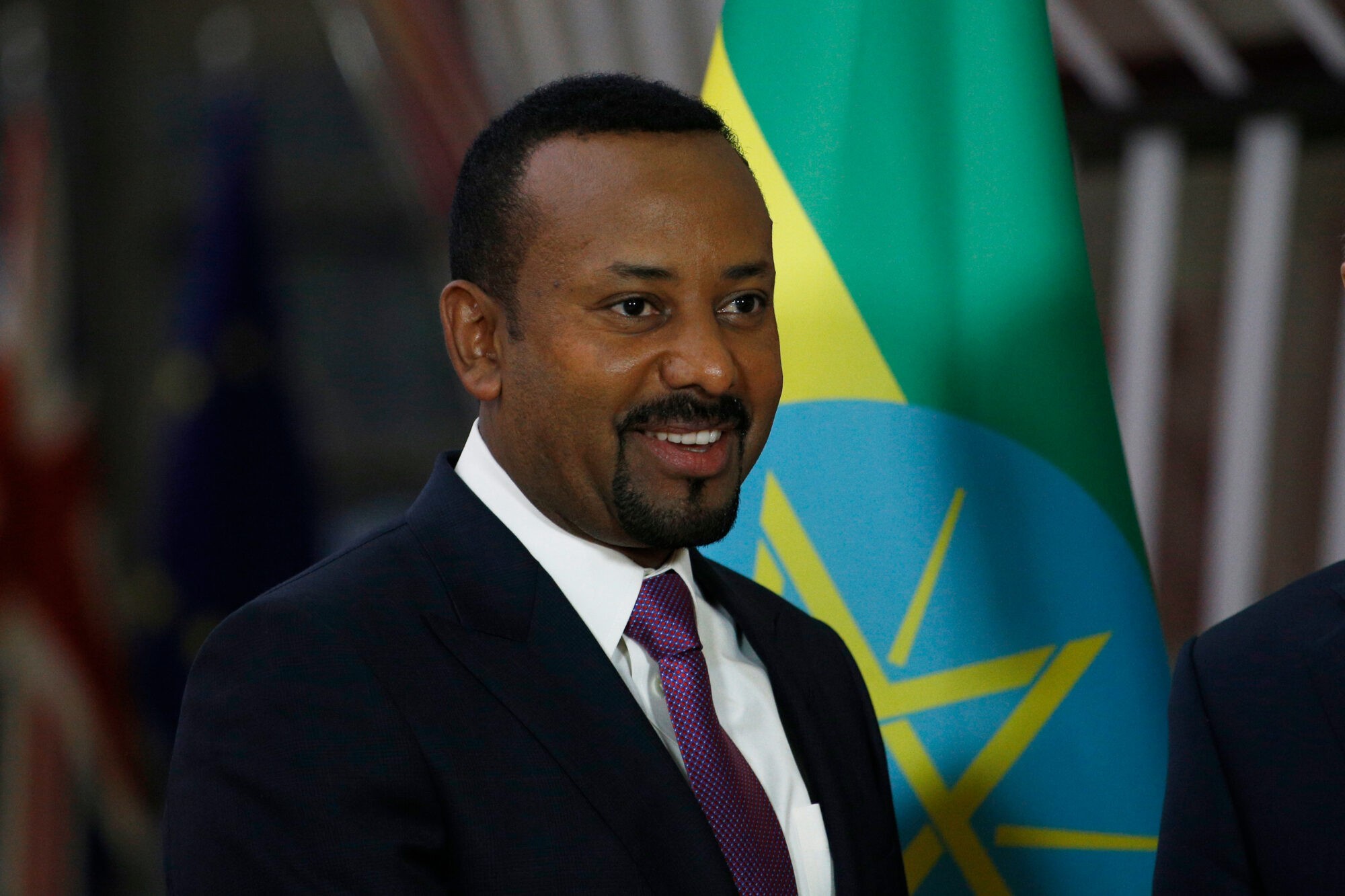
    Ethiopia’s Prime Minister Abiy Ahmed will leave a legacy of massive development. Editorial credit: Alexandros Michailidis / Shutterstock.com

    If financed and delivered well, Bishoftu could become one of the most consequential infrastructure assets in Africa: a statement of confidence, a magnet for capital, and a backbone for Ethiopia’s next phase of growth.

    For investors, lenders, and policymakers alike, it is a project worth watching closely—not just for what it builds, but for what it signals about Africa’s ability to finance and execute ambition at scale.


    ONGOLO will be organising a market visit of Ethiopia in 2O26. Please reach out if you are a prospective investor interested in exploring opportunities: hello@ongolo.com
  • African banks are beating, driving out foreign banks

    African banks are beating, driving out foreign banks

    There is growing speculation within African banking circles that Société Générale (SocGen) could be the next European bank to scale back its Africa operations. The French bank, which has a presence in 18 countries and two French overseas territories in Africa, has had two high-profile product failures that have set back its ambition to become the international bank of choice for Francophone Africa: Manko and YUP. Manko was launched in Senegal in 2013 to provide payments, loans, and savings to the informal sector – a market that has been neglected by traditional banking platforms across the continent. It was quietly closed in December 2020, two years after a €4.5m fraud gave French executives des frissons

    Société Générale is one of the leading banks in France. Is their Africa strategy showing signs if stress? Editorial credit: Kiev.Victor / Shutterstock.com

    The most recent product to be discontinued is YUP, the mobile money issuer service, which was launched in Senegal and Côte d’Ivoire in September 2017 and expanded to Burkina Faso, Cameroon, Ghana, Guinea, and Madagascar. SocGen saw an opportunity to elevate basic mobile money product offerings with cross-border transfers, savings, and credit. The bank is rumoured to have invested €20m and acquired 2.1m customers by the end of 2020, well short of the 5m customers needed to break even. Price wars with regional fintechs and mobile money operator, Orange, stifled profitability, and YUP will be wound down over a three-month period from March 2022.

    On the corporate side, SocGen made structured finance commitments of €11bn between 2018 and 2021 across Africa, of which less than €2bn was done by structured financing platforms on the continent, making suitcase banking a more efficient option for executing big-ticket deals.

    European banks are retreating from Africa

    As we reported in Foreign banks exit Africa: threat or opportunity?, European banks such as Standard Chartered, Barclays, Credit Suisse and Atlas Mara, are in the process or have already scaled back operations across the continent. Western banks often cite the cost of compliance as one of the reasons they find doing business in Africa so challenging.

    European regulations on Know Your Customer (KYC) have a fundamental flaw when imposed on African markets: the assumption that there is perfect information about individuals (identity documents, proof of address, proof of employment) and companies (shareholder unwrapping to the lowest common denominator, as though African stock markets and companies are that advanced).

    What international banks do not say in their careful crafted statements about their exit strategies is that despite being the big fish with balance sheets that dwarf all African banks, they are struggling to compete in a small pond.

    How African banks are winning on the home turf

    The African banking landscape is bifurcated with local and regional players taking the lead in the deposit-taking retail banking sector while corporate banking has long been dominated by international banks, backed by larger balance sheets, and more sophisticated product offerings. But things are changing.

    The big African banks are now accessing the international bond market on a regular basis and able to finance big-ticket deals in both local and foreign currency-denominations. They are also active participants in the syndicated market and moving into correspondent banking and trade finance – areas that were the bread and butter of international banks.

    Standard Bank is the biggest bank in Africa by total assets. Editorial credit: Rich T Photo / Shutterstock.com

    Standard Bank, which is Africa’s biggest bank by market cap ($16bn) and assets ($173bn), swept the board at the 2022 Bonds & Loans awards in March 2022 by winning: project and structured finance bank of the year; West and East Africa investment bank of the year; local markets bond house of the year; and, local markets ESG and Sustainable Finance Adviser of the year. Absa, which is the third largest bank ($88bn in assets), won awards for Sub-Saharan Africa investment bank of the year and, local markets loan house of the year.

    Access Bank won one award for the Bank Treasury and Funding team of the year award. Even though the Nigerian lender ranks further down the asset league tables with $30bn, it deserves to be crowned king of a whole new category: the bank to watch.

    Bold ambition: Access Bank plans to conquer Africa

    In 2002, when current Chairman Herbert Wigwe and his business partner bought into Access Bank, it was the 65th largest bank in Nigeria. Today it is number one, after surpassing Zenith Bank in 2021. Access Bank’s growth was driven by a Pan-African expansionary strategy and the acquisition of Atlas Mara’s assets in Botswana, Mozambique, and Zambia.

    Access also became the first Nigerian bank to enter the South African market by taking a $60m controlling stake in Grobank Limited, which has since been rebranded as Access Bank South Africa. Grobank used to lend to the agricultural sector and the plan is to start serving retail clients soon. Access recently raised $500m in the international bond market to finance new and existing projects and has publicly stated its ambitions to expand to Algeria, Angola, Côte d’Ivoire, Egypt, Ethiopia, Morocco, Namibia, and Senegal. Perhaps they should give SocGen and Standard Chartered a call…

    Next banking frontier: Ethiopia and Democratic Republic of Congo

    Access Bank will not have an easy march into Ethiopia, which is Africa’s second most populous country (115m people) and has a low bank penetration rate of 20%. Ethiopia is currently overhauling the financial services code which has kept the market closed to regional and foreign banks and expects to have a first draft ready by December 2022. Several regional and international banks set up rep offices years ago in anticipation of the changes and the two in pole position to capitalise on the liberalisation are Kenya’s leading banks, Kenya Commercial Bank (KCB) and Equity Bank.

    Equity Bank (assets: $13.5bn) was in negotiations with Atlas Mara for two years to buy the same assets that Access Bank eventually bought, so we can expect the rivalry between the two banks to intensify. Equity Bank walked away from acquiring the Southern African assets to consolidate its position in East Africa, with smart bets on markets like the Democratic Republic of Congo (DR Congo) where it has a 26% market share. Regional and international banks did not have much appetite for DR Congo because of poor political governance and a weak AML regime. But the administration of President Felix Tshisekedi is making all the right moves including joining the East African Community (EAC) bloc in March 2022, which will give it better access to the ports in Mombasa and Dar-es-Salaam and drive more trade.

    Model of the future: African banks going global

    Just as in East Africa, we can expect the leading banks in Egypt (National Bank of Egypt and Banque Misr) and Morocco (Attijariwafa, Banque Centrale Populaire and Bank of Africa – BMCE Group) to defend their markets from the ambitions of other regional banks.

    Attijariwafa, which paid twice the book value to acquire Barclays Bank Egypt in 2017, operates in 12 Francophone African countries and seven (7) European markets. Perhaps this is the model for the future: African banks charging into Europe?

    How African banks can maximise the opportunity

    Africa can learn from the Middle East which went through a similar journey when international banks partially or wholly exited markets following the 2008 global financial crisis. Leading Middle Eastern banks such as Qatar National Bank ($280bn in assets), First Abu Dhabi Bank ($250bn in assets), Emirates NBD ($190bn in assets) and Saudi National Bank, formerly known as National Commercial Bank ($160bn in assets) grew rapidly because they were forced to fill the gap and support clients through the economic recovery.

    Qatar National Bank is the biggest bank in the Middle East. Editorial credit: William Barton / Shutterstock.com

    These banks earned the trust of retail and local corporate clients and have overcome handicaps such as the ability to structure complex financing deals, innovate and rapidly deploy new banking products. Some international banks have since returned to the Middle East as the suitcase banking model is no longer as effective as having boots on the ground.

    The lesson for Africa, which we have already seen in the oil and gas sector, is that the international banks which make short-sighted decisions will eventually come back, especially when African governments solve for the informal sector, which accounts for 50% of GDP in Nigeria and a higher percentage in most countries.

    Conclusion

    The banking sector in Africa has enormous potential. The African banks that will win are the ones that can consolidate to build scale, innovate to build new markets, and more importantly, lure top African talent working in leading financial centres back to the continent to support the ambition.  

  • Foreign banks exit Africa: threat or opportunity?

    Foreign banks exit Africa: threat or opportunity?

    On 14 April 2022, the UK-regulated emerging markets bank, Standard Chartered Plc, announced plans to fully exit five markets in Africa (Angola, Cameroon, Gambia, Sierra Leone, and Zimbabwe) and will only retain corporate banking in Côte d’Ivoire and Tanzania. The bank, which once prided itself on the fact that it has been operating in Africa for more than a century, is abandoning its ‘here for good’ brand promise. Standard Chartered has been operating in Zimbabwe since 1892 and the former breadbasket of Africa was the bank’s fifth highest revenue generator globally as recently as in 2004. The bank’s Sierra Leone and Gambia offices opened in 1894; Cameroon in 1915; and Angola in 2014. Across many of the 15 markets where it operates, Standard Chartered is the oldest financial institution and has been steadfast in its unwavering support to the local economies. Until now.

    Why are international banks leaving Africa?

    The Standard Chartered press release stated that the impacted markets accounted for “around one percent of total Group 2021 income” and that the bank would continue to serve corporate clients in those markets, presumably from regional hubs in South Africa, Kenya, and Nigeria. As of early this week, it was unclear to some impacted staff and clients exactly how and when this transition will happen.

    Standard Chartered Bank Hong Kong. Editorial credit: Daniel Fung / Shutterstock.com

    Hong Kong-based Citi equity analyst, Yafei Tian, provided Reuters with the following explanation for the exits: “… the complexity of operating at that scale left the bank with a comparatively high cost-to-income (COI) ratio of 74%, which exiting sub-scale markets will help to improve.” It would be good to understand from Ms Tian how exiting markets where the average banker earns $350-2,000 per month will make a difference to the group’s high COI. The real culprits for the high COI are the bloated management layers in London, Singapore, Hong Kong, and Dubai.

    Standard Chartered is not the first long-standing international bank to partially bid the continent adieu. In February 2022, the scandal-prone Credit Suisse exited its wealth management businesses in Botswana, Côte d’Ivoire, Ghana, Kenya, Mauritius, Nigeria, Seychelles, Tanzania, and Zambia. It will only maintain a presence in South Africa and will refer clients to Barclays.

    Barclays Plc also exited Africa in 2017 when the UK bank sold its majority stake in Barclays Africa Group Limited (BAGL), which has since rebranded itself as Aba Group. Barclays had been in Africa since 1925 and made a strategic decision to focus on core markets in the UK and the United States. Similarly, the French banking group, Groupe BPCE exited non-core businesses in Cameroon, Madagascar, Republic of Congo, and Tunisia in September 2018.

    New entrants to Africa are pulling the plug even quicker. In October 2021, Atlas Mara withdrew from seven markets in Africa: Botswana, Mozambique, Nigeria, Rwanda, Tanzania, Zambia, and Zimbabwe. It found the macroeconomic environment challenging and the risks far outweighed the reward. The bank quit just seven years after boldly stating that Africa was “too big to ignore” and its ambition was “to be a positive disruptive force in Sub-Saharan Africa.”

    What are the negative consequences of the exits?

    The biggest challenge for African regulators when foreign banks exit is to ensure that there are correspondent banking arrangements in place to support cross-border remittances, payments, and trade finance. Increasing regulation and compliance costs have made correspondent banking less appealing for many international banks.

    Deutsche Bank stopped clearing US dollars for Stanbic Zimbabwe in August 2021 because of heightened sanctions risks. Stanbic Zimbabwe will now rely on nested banking arrangement via its parent, Standard Bank, which will increase the cost of doing business. Many local banks will struggle to do cross border transactions.

    Africa could learn from the Caribbean, which is still recovering after massive de-risking of correspondent banking relationships from 2015 crippled remittances, trade, foreign direct investments and increased transaction costs for consumers. Regulators in the island nations have worked so hard to remediate that they have surpassed Africa, which is now at the bottom of the Basel AML Index 2021.

    The 2021 Basel AML report specifically called out Cape Verde, Democratic Republic of Congo, Mali, Mauritania, Mozambique, and Uganda as having “zero effectiveness in both the prevention and enforcement” of AML. These are early warning signs about the increasing risks and compliance costs for foreign banks, which coupled with falling profitability, will trigger more exits from Africa unless Central Banks in the region take urgent action.

    The African Development Bank Group headquarters in Abidjan, Côte d’Ivoire. Editorial credit: Shutterstock

    The upcoming African Development Bank (AfDB) Annual Meeting to be held from 23-27 May 2022 is the biggest gathering of all the continent’s Central Bank Governors and the banks that operate in the region. The issue of foreign bank exits, correspondent banking de-risking and failing AML regimes will need to be addressed with the utmost urgency.

    Action required to turn threats into opportunity

    #1 Debunk the myth that Africa is insignificant to international banks

    Many people think that foreign banks are exiting Africa because there is no money to be made, which could not be further from the truth. Foreign banks are replacing a physical presence with a suitcase banking model that allows them to periodically fly in and out of a country while maintaining the most lucrative accounts.

    Assets linked to these accounts and the associated revenue are probably already booked offshore. It is important to understand that published financial statements by local subsidiaries of foreign banks in Africa do not give a true picture of the value the foreign bank is deriving from that markets. Read this point again.

    Top 10 deals in Africa (2020-2021) and the local/ Africa regional/foreign banks involved
    Mozambique LNG USD 14.9bn Commercial and ECA-Backed Term Loan (July 2020).
    Regional banks: Absa, AfDB, AFREXIM, IDC, Nedbank, Rand Merchant Bank, Standard Bank
    Foreign banks: ICBC, SMBC, Societe Generale, Cassa Depositi e Prestiti, Credit Agricole, DBS Bank, JPMorgan, Mizuho, MUFG, Nippon Life Insurance, Shinsei Bank, Standard Chartered, Export-Import Bank of Thailand, US EXIM, JBIC, UKEF
    Republic of Ghana USD 3.25bn 144a/RegS 4-Tranche Bond (April 2021)
    Local banks: CalBank, Fidelity Bank
    Regional banks: Rand Merchant Bank, Standard Bank
    Foreign banks: Citi, BofA Securities, Standard Chartered
    African Development Bank USD 3.1bn 144a/RegS Social Bond (April 2020)
    Foreign banks: BofA Securities, Citi, Credit Agricole, Goldman Sachs, TD Securities
    Ministry of Finance and Planning, United Republic of Tanzania USD 1.641bn Syndicated Commercial and ECA-Backed Term Loan (June 2020)
    Regional banks: AFREXIM, DBSA, TDB
    Foreign banks: Standard Chartered, KfW-IPEX Bank
    Bank of Industry USD 1bn Syndicated Term Loan Facility (Dec 2020)
    Regional banks: Africa Finance Corporation, AFREXIM, Rand Merchant Bank
    Foreign banks: Credit Suisse, SMBC
    Ministry of Finance, Republic of Angola USD 910m Syndicated Loan/IBRD Partial Risk Guarantee Facility with ATI CRI Cover (June 2021)
    Foreign banks: Standard Chartered Bank, BNP Paribas, Credit Agricole, Credit Suisse, Societe Generale, Landesbank Hessen-Thüringen, Santander, World Bank, BPI
    African Export Import Bank (AFREXIM) USD 907.5m Loan (May 2020)
    Foreign banks: EmiratesNBD, MUFG, Standard Chartered, Bank ABC, HSBC, State Bank of India, ICBC, Mizuho, Rand Merchant Bank, SMBC, Commerzbank, First Abu Dhabi Bank
    Helios Towers USD 750m 144a/RegS Senior Unsecured Bond (June 2020)
    Regional banks: Absa, Standard Bank
    Foreign banks: BofA Securities, JPMorgan, Barclays
    Africa Finance Corporation USD 700m RegS Senior Unsecured Bond (June 2020)
    Foreign banks: JPMorgan, MUFG, BofA Securities, Goldman Sachs
    Access Bank USD 500m 144a/RegS Perpetual NC5.25 Bond (Sept 2021)
    Local banks: Coronation Merchant Bank
    Foreign banks: Citi, JPMorgan, Mashreq, Renaissance
    Source: https://bondsloans.com/events/africaawards

    What is frustrating is that African pension funds and central banks, the custodians of the local banking systems, are the very clients that are managed by suitcase bankers. JP Morgan has been managing a sizeable proportion of Central Bank of Nigeria (CBN) reserves since April 2006 and earns an guestimated 8-9 figure USD fee annually – though this position has gradually reduced in recent years with leading Nigerian banks being given more responsibility for reserves management.

    The arrangement continued even after JP Morgan dropped Nigeria from the Emerging Markets bond index in 2016 and CBN is currently suing JP Morgan for $1.7bn for allegedly making a fraudulent payment of $875m back in 2011. Nigeria’s forgiving nature is in sharp contrast to Saudi Arabia’s handling of Citi which exited the Kingdom immediately after 9/11 and spent 20 years begging to be let back in after the rulers repeatedly snubbed them.

    The question to African regulators is why are we willingly giving away our crown jewels to foreign banks who do not value Africa? Respect and loyalty should be non-negotiable principles when doing business.

    #2 African regulators need a seat at the table

    The regulations that are driving some of the exits and which have had the greatest impact on the banking system in Africa are issued by the Financial Action Task Force (FATF), which is the global money laundering and terrorist financing watchdog. FATF was founded by G7 countries in 1989 and has 39 members.

    South Africa is the sole representative for the continent and has a mature banking system that bears more similarities to Western markets than to other African countries.

    It would be ideal if FATF membership could expand to include countries such as Nigeria, Kenya, and Egypt so that the voice of less mature banking systems is heard. The rest of Africa is currently represented by Associate Member bodies whose role is to implement FATF recommendations rather than input, debate, and challenge decisions.

    #3 Local and regional banks need to drive innovation

    International banks have struggled in Africa because they impose Western banking standards and products instead of trying to understand and meet the needs of the market. Unfortunately, this problem is compounded by the fact that many local banks, which emerged long after international banks, have copy-and-pasted the same approach and Central Banks have an attitude of deference to the West.

    The Western approach to Know Your Customer (KYC) requires formal identification documentation (national IDs or passport), proof of address (utility bill, mortgage agreement, or bank statements) and proof of income (payslips or bank statements). KYC is one reason why most Africans remain outside the banking system: an estimated 500m people on the continent do not have IDs; the lack of urban planning has resulted in residences, built from own savings, sometimes without street names and numbers, and providing their own utilities; and most people are informally employed and unable to prove how they make a living. These are just the barriers to opening an account – the bar is even higher when trying to get credit.

    As a result, the financial services landscape in Africa is highly fragmented with traditional banks serving the small formal sector while fintechs, mobile money and micro-lenders serve the much larger informal sector, which is as much as 80% in some countries. The informal sector is where the innovation is happening.

    In Somalia, where Barclays and other international banks ended correspondent banking relationships in 2015, it is the Fintechs that are supporting aid agencies like World Vision and Save the Children to move funds by compensating for the lack of national IDs by using referrals from clan networks and the use of biometrics.

    African Central Banks should have tabled these challenges and proposed alternative solutions to bodies like FATF, to gain universal acceptance. Instead, we’re seeing European banks like HSBC launching products called ‘No fixed address bank account’ to cater for the homeless, which is solves for similar issues that have been bouncing around unresolved for decades in Africa. We just don’t help ourselves.

    Local and regional banks have a key role to play in finding innovative solutions because there are limitations to what fintechs and mobile money operators can do, such as facilitating cross-border trade. The less stringent regulations outside the banking sector is also driving up the AML risks in the region, which should be of great concern given the negative consequences previously highlighted.

    Conclusion

    Africa needs to remain part of the global financial system and as more international banks retreat to their backyards, it is imperative that local and regional banks start playing a leading role in the sector.

    It is only African banks that we can be certain will be here for good.