
Category: Policy Development

  • Africa’s energy conundrum: fossil fuels or darkness?

    Africa’s energy conundrum: fossil fuels or darkness?

    The Mission 300 Africa Energy Summit brought 30 African Heads of State and governments, business executives and development partners to Tanzania at the end of January 2025. The Dar es Salaam Energy Declaration committed to connecting 300 million Africans to electricity by 2030. There are currently 600 million people in Africa without access to electricity. Twelve countries also presented National Energy Compacts, which outlined targets to drastically scale up electricity access, increase renewable energy usage, and attract private investment. 

    However, not everyone agrees that renewable energy is the sole answer for Africa’s power crisis. We will examine both sides of the argument.

    The case for renewable energy in Africa

    Africa has potential to become the renewable energy leader in the world. The continent has 60% of global solar potential and 12% of global hydro power potential. Renewable energy, particularly decentralised solar and wind systems, can provide faster and more cost-effective solutions to energy poverty compared to traditional fossil fuel infrastructure. Yet, renewables accounted for less than 4% of Africa’s total energy production in 2022, according to the International Energy Agency (IEA). 

    Africa is one of the most vulnerable continents to climate change, despite contributing less than 4% of global greenhouse gas emissions. By embracing renewables, Africa can position itself as a leader in clean energy innovation. The global energy transition is accelerating, with renewables becoming increasingly cost-competitive. 

    Successful renewable energy projects in Africa

    Several countries in Africa have successfully embarked on the transition to renewables dominance:
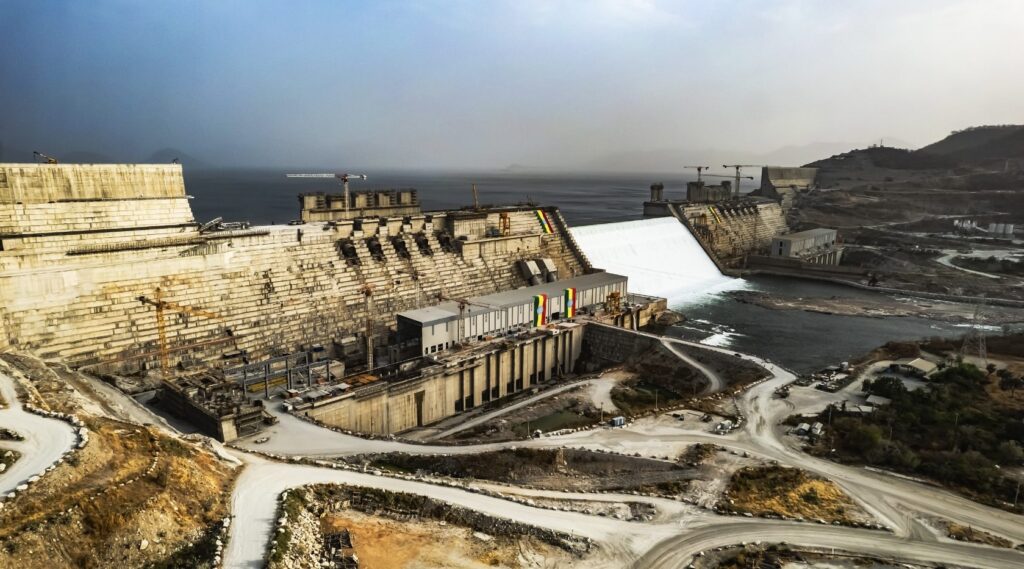
    Dam in Ethiopia
    The Grand Ethiopian Renaissance Dam (GERD) will be the largest hydro power plant in Africa
    • Hydropower projects: the Grand Ethiopian Renaissance Dam (GERD) in Ethiopia is expected to be Africa’s largest hydropower plant once fully operational. It will have a full capacity of 6.45 GW and provide domestic electricity and exports to 13 countries. The 2,075MW Cahora Bassa hydroelectric dam in Mozambique supplies electricity domestically and exports to other countries in Southern Africa. The 250MW Bujagali Hydropower Plant in Uganda is an example of a successful public-private partnership in the renewables sector.
    • Solar projects: The 1.8GW Benban Solar Park in Egypt is the largest solar farm in Africa and reduces Egypt’s carbon emissions by two million tonnes annually. The 580MW Noor Ouarzazate Solar Complex in Morocco provides clean energy to over 1 million people and reduces Morocco’s carbon emissions by 760,000 tons annually.
    • Wind projects: the 310MW Lake Turkana Wind Power project in Kenya is the biggest wind farm in Africa. It meets 15% of Kenya’s electricity needs, powering over 1 million homes. The 120MW Ashegoda Wind Farm in Ethiopia supplies electricity to over 3 million people. The 30 MW Nouakchott Wind Farm in Mauritania meets 15% of Mauritania’s electricity needs.
    • Geothermal Projects: the 800MW Olkaria Geothermal Plant in Kenya is the largest geothermal power producer in Africa. It is a global leader in geothermal energy development and supplies 30% of Kenya’s electricity needs. The 150MW Corbetti Geothermal Project is under construction in Ethiopia.
    • Off-Grid and Mini-Grid Projects: the pay-as-you-go M-KOPA Solar platform provides affordable solar energy to over 1 million households in Kenya, Uganda, and Tanzania. The 1.3MW Nuru Solar Mini-Grids in the Democratic Republic of Congo provides reliable electricity to over 10,000 people in Goma.

    The challenges that need to be overcome

    Firstly, developed countries have pledged to provide $100 billion annually in climate finance to developing nations, but this promise has not been fully met. Africa alone needs $200 billion annually. Renewable energy systems often require advanced storage solutions and grid upgrades to ensure reliability. Many African countries lack the technical expertise and infrastructure to support these systems. Developed nations must fulfil their climate finance commitments and provide technical and financial support to help Africa transition to renewables.

    Secondly, the pursuit of renewable projects is also driving up the external debt burden. While renewables have lower operating costs, the initial investment required for infrastructure (e.g., solar farms, wind turbines, and grid upgrades) can be prohibitive for cash-strapped African governments. 

    Lastly, growing the renewables sector should create jobs, stimulate local industries and attract foreign investment. The solar value chain, for example, includes solar panel manufacturing, installation, and maintenance. The reality is that most of the components for renewable energy are imported from China.

    Is Africa being naive about renewable energy?

    Critics of Africa’s all-in approach to renewable energy point to the hypocrisy of the developed countries. Their push for Africa to pursue the clean energy pathway is a case of do as I say, not as I do. 

    Developed countries have historically been the largest emitters of greenhouse gases, contributing significantly to climate change. Many Western countries and financial institutions advocate for Africa to transition to clean energy, yet continue to invest in fossil fuels themselves. Africa is being pressured to restrict fossil fuel use under the guise of climate action, but these same resources are then extracted and exported to power economies in Europe, the USA and Asia. If the global polluters continue to use fossil fuels, how exactly will Africa’s renewable energy efforts shield them from climate change effects?
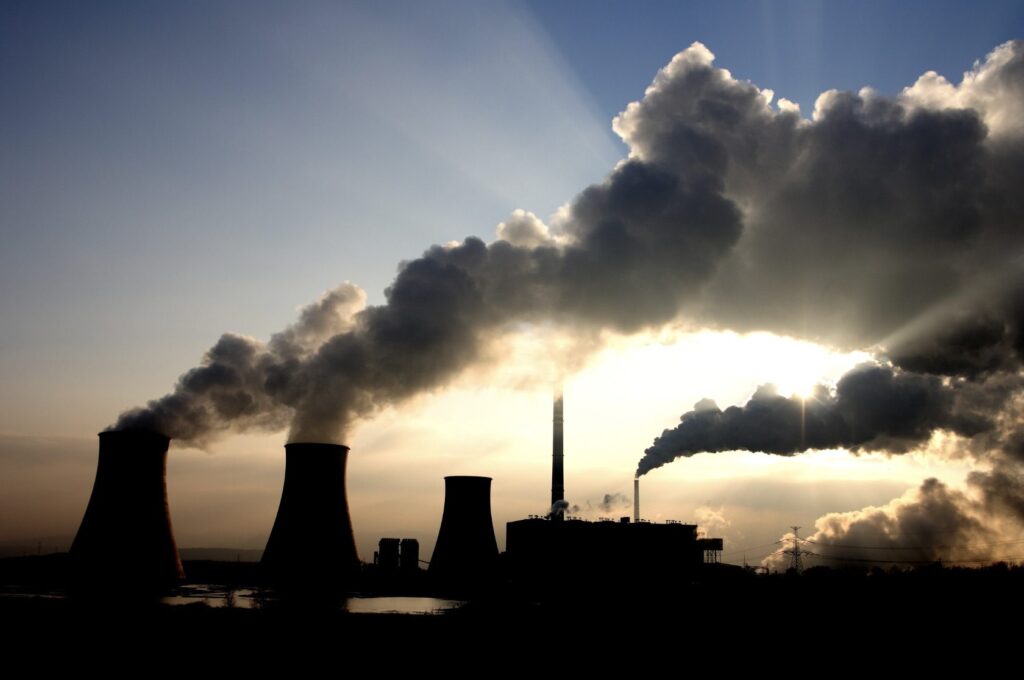
    Coal-plant polluting the atmosphere
    Coal-fired power station in North Rhine, Westphalia, Germany

    For example, Germany imported €180M worth of coal and coal briquettes in October 2024. The previous month, a newspaper article reported that Germany was “patiently waiting for South Africa to move away from coal”. The European Union’s biggest economy also offered South Africa around $20m to support efforts to move to wind and solar. It is worth noting that coal made up 30% of Germany’s energy mix in 2022.

    The World Bank and IMF discourage financing for African fossil fuel projects but an investigation revealed that some funding is going against their own green pledges. The campaign group Urgewald identified $3.7billion in trade financing from the World Bank in 2022 that likely indirectly funded oil and gas projects.

    The push for clean energy in developing countries can be perceived as a way for wealthier nations to maintain their economic dominance while restricting the development pathways of poorer nations. This dynamic raises questions about equity and justice in global climate policy.

    The case for a gradual energy transition

    Developed countries historically built their economies on fossil fuels and they remain the dominant fuel source for energy production. In North America, natural gas, oil and coal accounted for 81.2% of energy production in 2022. The energy mix from oil, natural gas and coal for the same period was 83% in Asia and 70.5% in Europe. In the Middle East, natural gas and oil were 98% of energy production in 2022.

    Africa’s energy demand is growing rapidly as populations expand and economies follow the industrialisation pathway. Many African countries are still working to provide reliable energy access to their populations. Coal and other fossil fuels are often seen as affordable and reliable options for rapid industrialization and economic development. Asking these countries to leapfrog straight to renewables without adequate financial and technological support can be seen as unfair, especially when developed nations continue to benefit from fossil fuels.

    Coal is the cornerstone of South Africa’s energy system, with more than 80% of its electricity generated from coal-fired power plants. Africa’s leading economy and most industrialised country accounts for 15.5% of the continent’s energy production. There are coal- fired power plant projects (expansion and new) underway in Mozambique, Malawi, Tanzania and Zambia, all of whom (except Malawi) have significant coal deposits

    Africa can adopt a balanced energy mix, combining renewables with transitional fuels like natural gas and coal to meet immediate energy needs while building a sustainable energy future.

    candle
    For many Africans, the daily lives of electricity have been replaced by candles and darkness

    Conclusion

    From a long-term perspective, transitioning to clean energy today is the best option for Africa. Climate change is real and Africa has the most to lose if carbon emissions are not reduced.

    However, Africa cannot continue to be subservient to the rest of the world. The dark continent, which has contributed the least to global carbon emissions and is the least developed, is the one that is making the ultimate sacrifice by exporting its fossil fuels to other parts of the world and staying in darkness. Make that make sense!

    African countries are expected to borrow billions of dollars (mainly from developed countries) to invest in renewable energy projects that offset carbon emissions by developed countries? Africa is getting played. Given the failure of the carbon credits markets to adequately compensate Africa, developed countries must pay for the renewable energy projects as compensation.

    We need to come to the negotiating table with a different approach and make commitments that are rooted in reality. African governments need to realise that their people need electricity today, not the promise of clean energy in 2030 and beyond. Balancing short and long term needs, with African people at the heart of decision-making, is how we will judge the success of the Dar es Salaam declaration.
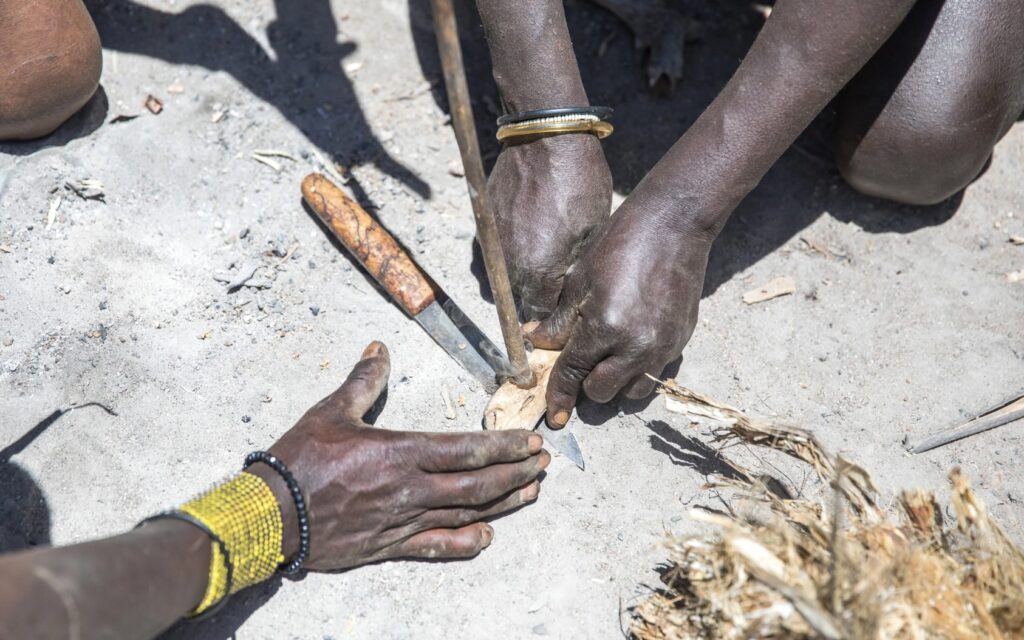
    making a fire
    The Hadzabe tribe of Tanzania making a fire the traditional way. The inability to increase energy supply to meet demand is setting Africa back
  • The African Continental Free Trade Area: actuality or pipe dream?

    The African Continental Free Trade Area: actuality or pipe dream?

    The African Continental Free Trade Area (AfCFTA) agreement, which came into effect on 1 January 2021, is an ambitious plan to achieve economic development through regional trade integration. The agreement covers a single market with 1.3 billion consumers and a combined GDP of $2.2 trillion.

    According to the United Nations Conference on Trade and Development (UNCTAD), the AfCFTA could generate welfare gains of $16.1 billion and boost intra-Africa trade by 33% from the current 16-18%. The agreement has been signed by all African countries except Eritrea.

    Key events leading up to this milestone achievement:

    • 1991: Treaty establishing the African Economic Community signed (Abuja)
    • 2012: Agreed to establish a free trade area by 2017 (Addis Ababa)
    • 2018: 44 member countries signed the agreement establishing AfCFTA (Kigali)
    • 2019: the AfCFTA Secretariat is opened in Accra as an independent institution responsible for implementing the agreement
    • 2021: trade can commence

    Three reasons why AfCFTA could succeed

    1. Regional integration can deliver significant benefits

     The European Union framework is credited with increasing bilateral exporting relationships among member states. The total intra-Europe trade is estimated at around 60% though individual country estimates vary. Africa’s target of 50% is not unreasonable.

    Other regions are following the same approach. The AfCFTA was meant to be the largest free trade area in the world but the honour goes to the Asia-Pacific region following the signing of the Regional Comprehensive Economic Partnership (RCEP) on 15 November 2020. The RCEP has 15 members including Australia, China, Japan, South Korea and Singapore who represent 30% of the world’s population (2.2 billion people) and 30% of global GDP ($26.2 trillion).

    2. Demographics will drive future growth

     Africa has a population that is 2.6x bigger than Europe. The demographics alone are stacked in Africa’s favour.  Africa also has the world’s fastest growing middle-class and it is estimated that the number of Africans living below the poverty line will be just 33% by 2060.

    This middle class will be the key driver of Africa’s future economic growth as we saw in China. China’s economic reforms lifted 600m out of poverty which increased domestic consumption of Chinese-made commodities.

    3. Exploiting Africa’s comparative advantage

     Africa has a natural comparative advantage in the production of agriculture commodities, metals & minerals and tourism. Despite having 60% of the world’s arable land, Africa is now a net importer of food. Import substitution of food products such as rice imported from India and fish from China could be some of the quick wins for the region. This will in turn spur the growth of regional manufacturing.

    Three reasons why AfCFTA could fail

    1. Execution failure

    Africa has eight Regional Economic Communities (RECs) that have been in existence since 1964 when the Economic Community of Central African States (ECCAS) was established and includes the dormant Arab Maghreb Union (AMU) that has not had any meetings since 2008. The jury is out as to whether these RECs have achieved their main objectives.

    This is one of the reasons cited by Eritrea for not signing the AfCFTA agreement. The country’s Information Minister, Yermane G. Meskel, tweeted that they wanted to “focus on incremental/achievable results i.e. nurturing first the building blocs or RECs”.

    The AfCFTA agreement is light on the detail as negotiations between countries are yet to conclude. There is a lack of clarity about what the tariff reduction will be based on (tariff lines or total trade), how market access will work in practice and how to level the playing field between larger and more established markets like Nigeria, Ghana and smaller countries. India pulled out of the RCEP agreement because key concerns were not addressed and the net costs seem to outweigh the benefits.

    This begs the question: have countries adequately evaluated the benefits of joining AfCFTA and who is keeping them honest?

    There is little publicly-available evidence of these discussions.

    2. Economic integration without political integration cannot succeed

     The EU’s greatest advantage is that it has both political and economic integration and respects the rule of law on which its treaties are founded. As a result, Brussels wields enormous power and influence in ensuring that countries comply. The African Union does not have the same level of influence which will make the AfCFTA’s Secretariat’s job much harder.

    The counterargument is that Asia’s RCEP does not include political integration. However, Asia has a track record of delivering results and the RCEP has better odds of succeeding than AfCFTA. The RCEP is built on the success of the ASEAN Free Trade Agreements which have eliminated 98.6% of tariff lines. Intra-ASEAN trade in 2017 was 23% for the region and varied by country from 50.8% for Laos to 10% for Cambodia. 

    3. African countries need to produce goods that Africa imports

    A new regional body will not fix the underlying structural issue: intra Africa trade will only increase when Africa starts producing commodities that countries need.

    Africa mainly imports motor vehicles, computers and IT products, pharmaceuticals, food and electronics. African consumers would rather buy a second hand 15 year old Toyota Hilux than a brand new and affordable vehicle produced by African automobile companies such as Innoson Motors (Nigeria), Wallyscar (Tunisia), Kantanka Cars (Ghana), Mobius Motors (Kenya) and Kiira EV (Uganda). This problem will become more severe when European countries ban petrol and diesel cars in 2030 (please look out for a future blog post on this subject).

    Three key enablers to realise the ambition

    1. Strong Command Centre

    The AfCFTA Secretariat needs to ensure the timely delivery of AfCFTA which was realised four years later than originally agreed in 2012. The Secretariat will also need to set clear and specific objectives that are linked to publicly available performance indicators. One of the challenges in assessing the performance of regional blocs in Africa is the lack of transparency about objectives and performance.

    The African Union will need to step up its role in resolving roadblocks and managing the 54 heads of state who may agree with the common goal but have different agendas. AU’s power and authorities are currently drawn from goodwill which does not work when things go wrong as seen recently in Ethiopia and Mali. The AU can take the learnings from Europe to enhance the legal framework around treaties and make them more enforceable.

    2. Infrastructure

    This remains a huge impediment and many questions remain unanswered:

    • How will goods, services and people move around Africa?
    • How will the AU and AfCFTA ensure that countries are building roads and rail that connect Africa and who will pay for it?
    • How will manufacturing plants be set up and operated if basic utilities such as water and electricity are unavailable?

    Power, water, roads, rail and affordable air travel are the basic building blocks to economic development and need to be sorted out urgently.

    It is good to see the positive reaction from leaders such as Akinwunmi Adesina, President of the African Development Bank (AfDB), who won an award for his contribution to AfCFTA. Multilateral institutions such as AfDB, African Export-Import Bank (Afreximbank) and Trade & Development Bank (TDB) will be the financial engines that will help realise this ambition.

    3. Skilled labour

     If Africa aims to start manufacturing motor vehicles, computers and other high-tech products which the continent currently imports, there needs to be a radical change in higher education curriculums and skills training.

    A quick google search on robotics and AI at universities in Africa shows that few universities outside of South Africa are raising the education bar to match that of Asia, Europe and Americas. Ministries of Education need to work hand in hand with Trade and Finance to provide the necessary human capital to support AfCFTA.

    ONGOLO Prediction

    The AfCFTA is doomed to fail if the responsibility for achieving the main objectives remains solely in the hands of politicians and African Union technocrats.

    Africa has been too reliant on the public sector to lead economic development – a costly mistake as evidenced by the number of loss-making parastatals that dominate most economies.

    It is time for a radical shift in the cockpit with the private sector and multilateral agencies taking the co-pilot seat and the AfCFTA and African Union retaining the captain and flight engineer seats, respectively. Bringing in the private sector will support the creation of industries, jobs and ultimately increase the GDP of Africa.

    Identify leading African corporates from every country to support implementation will increase the likelihood of success. The Dangote Group announced last week that AfCFTA will allow them to expand their footprint. Dangote already operates in 10 markets and will be expanding to five more.

    Large pan-African corporates will be the clear winners from AfCFTA. It is up to the AfCFTA Secretariat to ensure that the benefits extend to small and medium enterprises as well as ordinary citizens in order for this initiative to be a true success.

    © 2021 Muloongo Muchelemba. All Rights Reserved